Tommaso Morrione, Class of 2020, Politics+French Literature
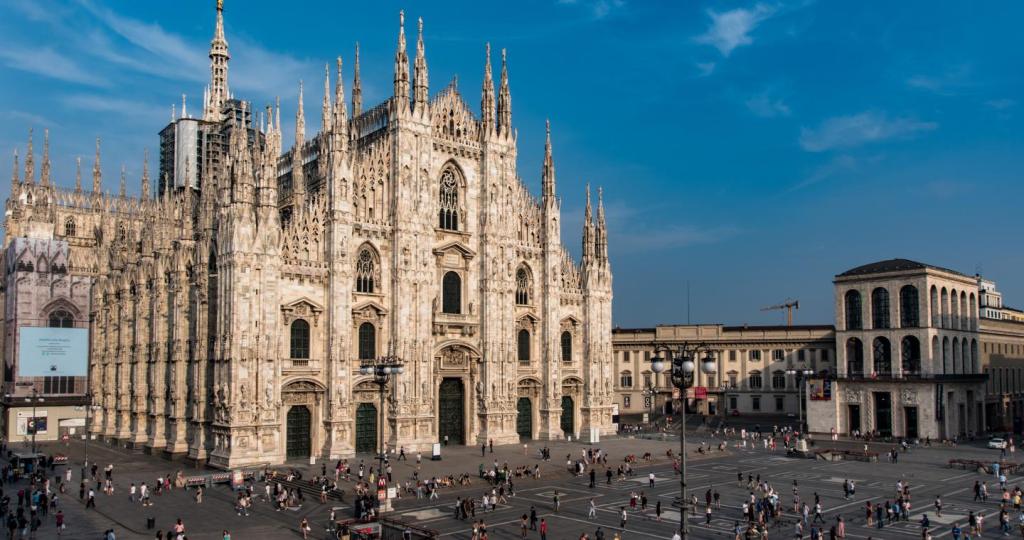
This link offer a 360 degree view of the façade. https://www.duomomilano.it/en/photo360/the-duomo-stained-glass-windows-illuminated-for-christmas/40/
When I listened to the chorus of Handel’s Messiah, the first thing that caught my attention was the air of grandeur and splendor created by the music. This sense of majesty is largely attributable to the climaxes of intensity and range found in the chorus. The chorus forms a wave-like contour in terms of pitch and volume—as there are sharp peaks of intensity and pitch on the first syllable of “Hal-le-lu-jah.” Later in the chorus, this emphasis shifts to the syllable “lu”—but the effect remains the same. These peaks and troughs of intensity lead to a melody “rich in expression that rises and falls in great majestic arches” (Forney and Machlis 126).
The first image that came to my mind after hearing the piece was the Duomo of Milan (Milan’s cathedral), because it perfectly captures the sense of grandeur and height/elevation achieved by the music. The façade’s most notable feature is a series of 10 spires—with the spires increasing in height as one moves towards the center of the façade. These spires—and the gaps between them— create a sense of magnificence and verticality that mimic the peaks of intensity and range that are found in the Chorus of Handel’s Messiah. In effect, both pieces—the Duomo and Handel’s Messiah—use their “height” to reach towards the heavens, a common theme shared by religious music and religious visual media.
 Levitsky Music Hum Fall 2019 Class Blog